

Professional Hot-Dip Galvanizing Process for Scaffolding Components
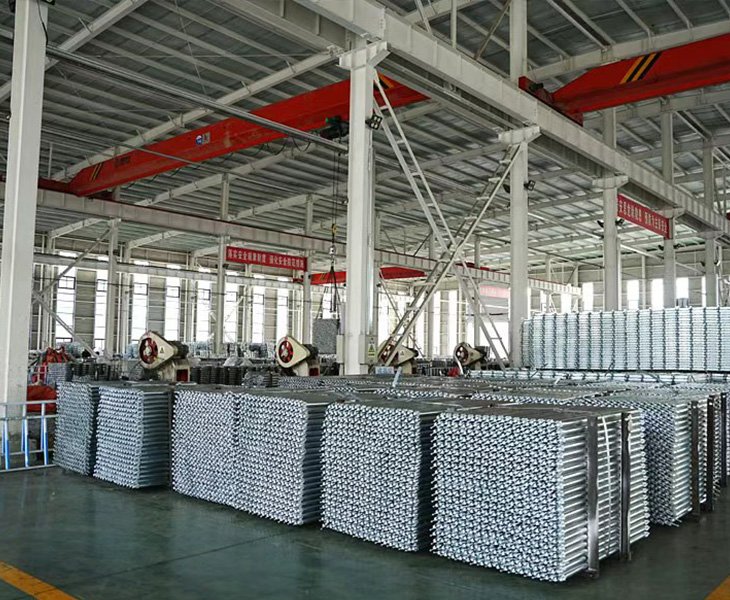
Xinliang owns a complete in-house hot-dip galvanizing workshop, integrating scaffolding production and surface anti-corrosion treatment. We provide hot-dip galvanizing service for ringlock, cuplock, quick-lock scaffolding and accessories. Strict pre-treatment, zinc-bath control and finished product inspection can guarantee stable zinc-layer thickness. Our galvanized products suit coastal, tunnel, bridge and outdoor heavy-duty projects, well-received by domestic and global engineering clients.
Our Galvanizing Production Process
We use a strict galvanizing process to provide uniform zinc coating, strong corrosion resistance, and longer service life for scaffolding products.
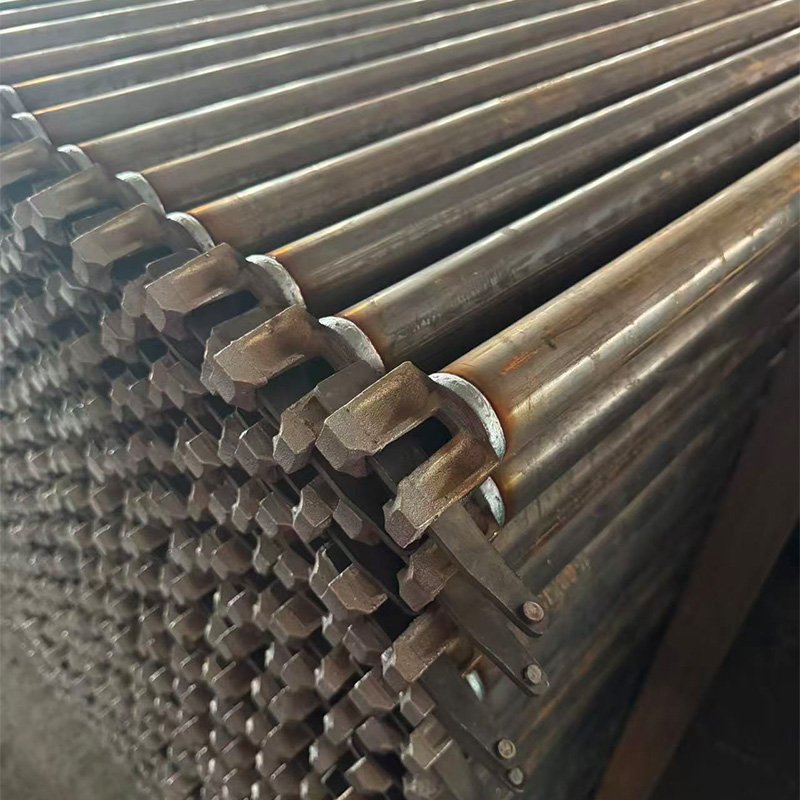
Remove oil, rust, and impurities to create a clean surface for zinc coating.
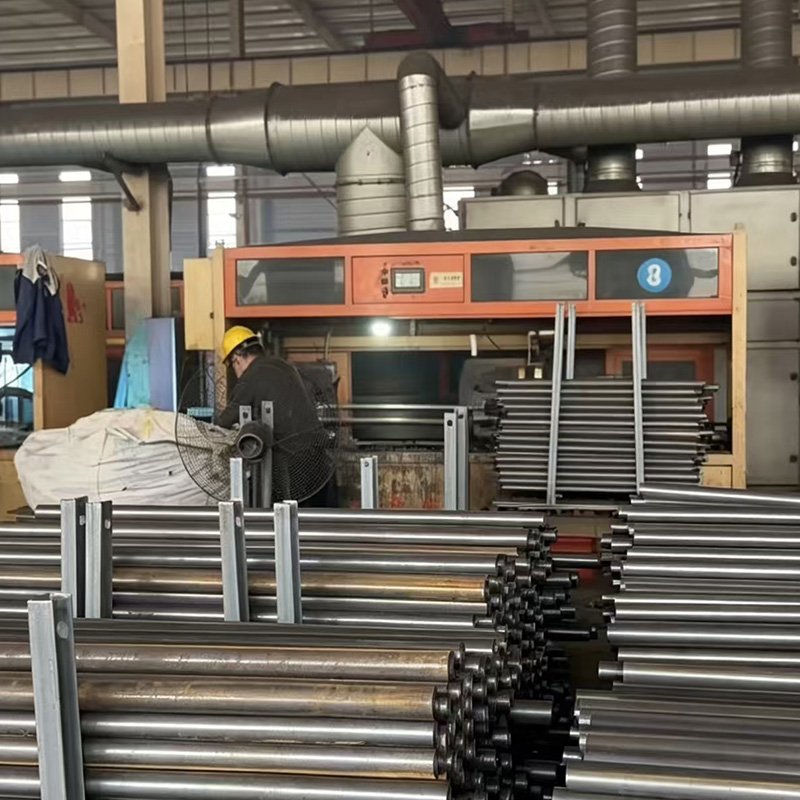
Chemical cleaning removes oxide layers and improves zinc adhesion.


Steel components are immersed into molten zinc to form a protective coating.
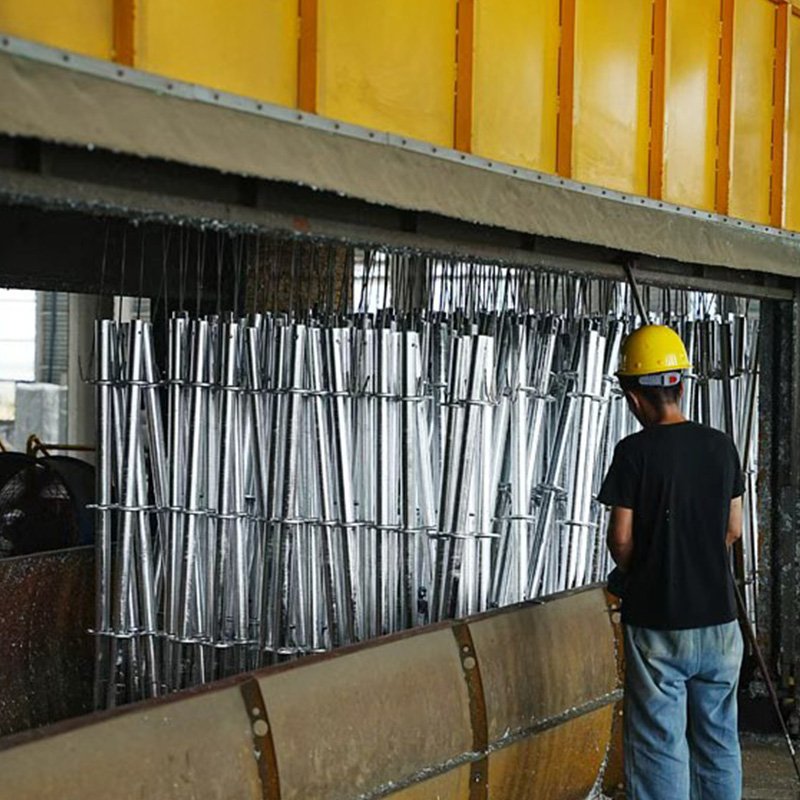
Finished products are cooled and inspected for appearance and coating quality.
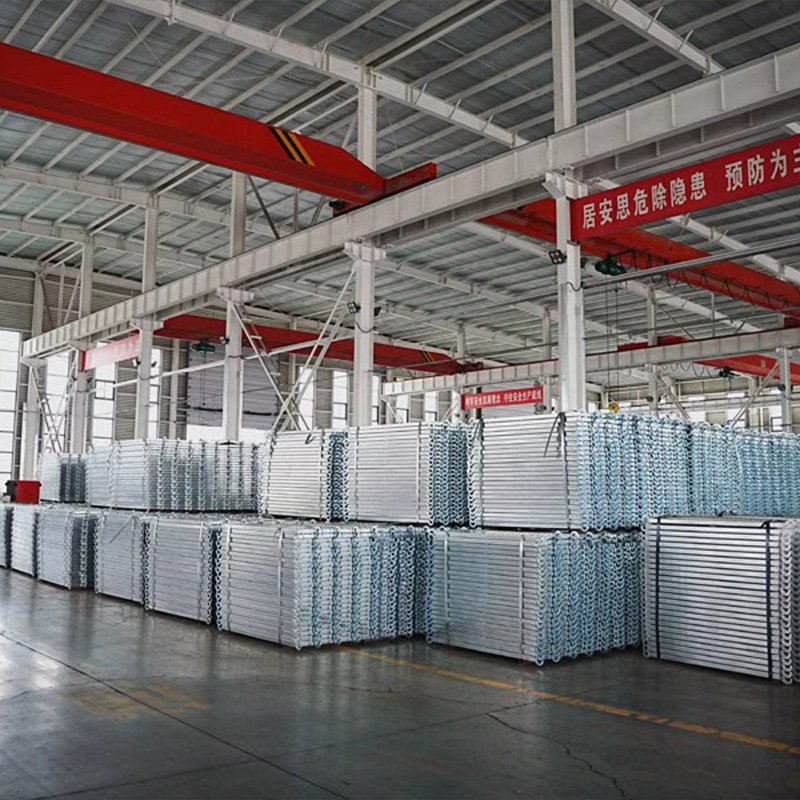
Qualified galvanized components are carefully packed for international transportation.
Why Hot-Dip Galvanizing for Our Scaffolding Products
Unlike painting or electric galvanizing, hot-dip galvanizing creates zinc-iron alloy metallurgical bonding. It delivers reliable anti-rust performance for repeatedly used scaffolding under outdoor, humid or salt-spray working conditions.

Zinc liquid penetrates tube inner walls, weld seams and connector gaps.

Zinc-iron alloy layer fuses with steel substrate, not simple surface attachment.

Resist collision & friction during transport, erection and dismantling.

Even with a partial scratch, zinc protects the steel matrix from corrosion.

Zinc layer reaches 85-120μm to meet international anti-corrosion requirements.

Greatly reduce replacement frequency for rental-oriented scaffolding.

Degreasing, pickling & fluxing avoid leakage-plating or poor adhesion.

All galvanized parts pass national building-quality-center inspection.
Strict Full-Step Hot-Dip Galvanizing Workflow
Every scaffolding part goes through standardized procedures: degreasing to remove grease, pickling for rust & oxide scale removal, flux activation, preheating, molten-zinc dipping at a controlled temperature, cooling, passivation and final inspection. Poor pre-treatment will cause leakage, plating, or coating peeling. Our lab conducts sampling tests for zinc-layer thickness and adhesion for every batch.

Hot-Dip Galvanizing VS Electric-Galvanizing for Scaffolding
Electric-galvanizing owns thin zinc layer of only 5- 15 μm, suitable for mild indoor environments. Our hot-dip galvanizing obtains thick zinc-alloy layer. For frequently moved construction scaffolding facing rain, salt fog and dust, hot-dip galvanizing delivers far longer anti-corrosion lifespan and lower whole life cycle cost.
Our In-House Galvanizing Workshop Strength


Xinliang is a comprehensive scaffolding manufacturer with three production zones; we are equipped with an independent hot-dip galvanizing workshop. Annual production capacity reaches over 300,000 tons. We cooperate with China Railway and China State Construction and export to Southeast Asia, Africa and South America. All galvanized products are tested by national building-engineering quality supervision inspection center.
Service life depends on the working environment. Under ordinary urban construction environments, qualified hot-dip galvanized scaffolding can keep anti-corrosion performance for 15-20 years. For coastal high-salt-fog projects, proper maintenance can greatly extend service life. Our zinc-layer thickness strictly follows standard to guarantee long-term reuse.
Our standardized process strictly controls pickling time to avoid hydrogen brittleness risk. All finished galvanized scaffolding components will go through a load-capacity sampling inspection. Galvanizing treatment will not reduce the structural bearing performance of scaffolding systems.
Main reasons include incomplete degreasing, excessive pickling or invalid flux treatment. Xinliang enforces full-process management for pre-treatment. Every batch will have samples taken for inspection to avoid these defects before delivery.